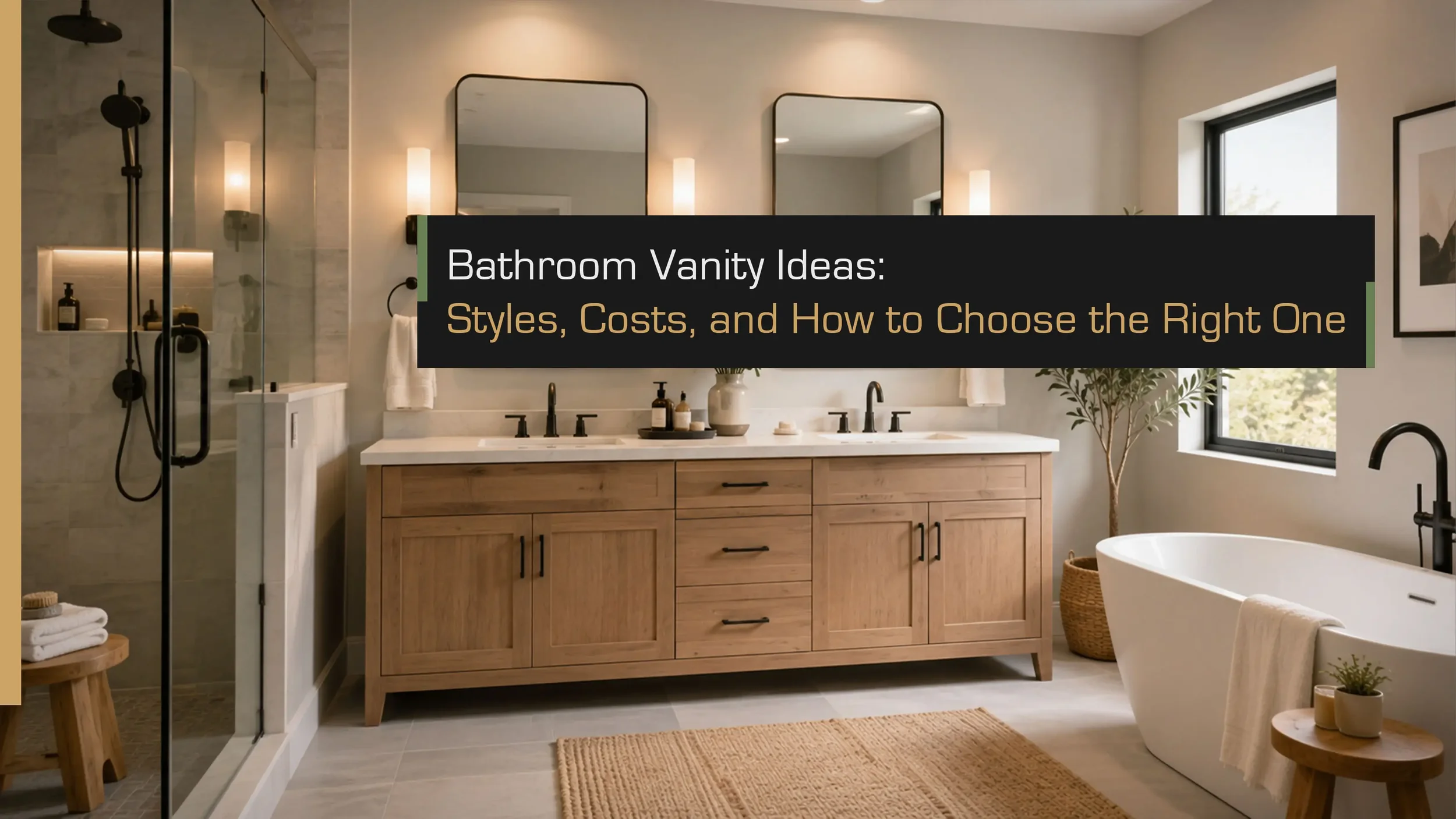
A bathroom vanity is the first thing you see walking in and the last thing you touch before bed, which makes it the hardest working surface in the room and the one most worth getting right. Get the vanity right, with the right size, the right storage, the right sink style, and the rest of the bathroom tends to fall into place around it. Get it wrong, and no amount of tile or lighting fixes a cramped countertop or a cabinet that's already full by week two. This guide walks through the styles worth considering, a simple framework for choosing between them, and real world cost ranges to plan against.
How to choose a bathroom vanity: start with size, choose a single or double sink based on how many people use the space daily, then match storage to what you actually store, pick a durable countertop material like quartz or solid wood, and select a sink style that fits the look. The budget ties every choice together.
What a Bathroom Vanity Is (and Why It Anchors the Room)
A bathroom vanity is the combination of a cabinet, a countertop, and a sink, working together as one unit rather than three separate fixtures. That's what sets it apart from a pedestal or wall mounted sink, which looks clean but offers almost no storage and no real counter space for daily essentials. A vanity gives you both, plus a surface large enough to set the tone for the whole room, whether that's warm wood tones, sleek floating minimalism, or classic painted cabinetry. There's also a practical payoff: an updated vanity is one of the fastest ways to make a whole bathroom read as renovated, even if nothing else changed.
Bathroom Vanity Styles and Ideas
Floating (Wall Mounted) Vanities
Floating vanities mount directly to the wall, leaving open space underneath instead of resting on the floor. The look is modern and visually light, which makes a small bathroom feel bigger and easier to clean around. They suit minimalist or contemporary spaces, especially powder rooms and primary suite bathrooms where floor space is tight. Many pair them with a vessel sink and a slim profile cabinet for storage above. If clean lines and an airy feel matter to you, this is one of the most popular bathroom vanities ideas in current builds.
Freestanding and Furniture Style Vanities
Freestanding vanities sit on the floor like a piece of furniture, often with turned legs, paneled doors, or a hutch style top. The look is classic, substantial, and warm, especially in stained wood or muted painted finishes. They suit traditional or transitional bathrooms where the vanity is meant to feel like a real furniture piece rather than a built-in fixture. They're also a strong option when you want generous storage without a sleek, modern edge.
Single vs Double Sink Vanities
A single sink vanity works well for smaller bathrooms or households where only one person typically gets ready at a time, freeing up budget for upgrades elsewhere. A double sink vanity suits shared primary bathrooms and busy mornings, giving two people their own counter zone and storage. The tradeoff is space: double vanities typically need at least 60 inches of width to avoid feeling cramped, so measure before committing to two sinks.
Open Shelf and Console Vanities
Open shelf and console vanities trade closed cabinetry for exposed shelving or a simple table style base, often with woven baskets or folded towels on display. The look is airy, minimal, and a little more relaxed than a fully enclosed cabinet. They suit bathrooms where you want visual lightness and don't mind storing items in plain sight. This style also works well in coastal, Scandinavian, or modern farmhouse spaces that lean toward an uncluttered, lived in look.
Custom and Statement Vanities
Custom vanities range from repurposed dressers and antique tables converted into sink bases to fully made to fit cabinetry in bold colors like emerald, navy, or terracotta. The look is one of a kind and often becomes the room's focal point rather than a background fixture. They suit homeowners who want their bathroom to feel personal and distinct, not pulled from a catalog, and who are willing to invest extra time in fabrication or sourcing.
How to Choose the Right Vanity for Your Bathroom
Size and Layout
Start by measuring before you fall in love with anything online. Leave at least 30 inches of clearance in front of the vanity for comfortable movement, and check that cabinet doors or drawers won't collide with a door swing or toilet. Single sink vanities typically run 24 to 48 inches wide, while double sink vanities need a minimum of 60 inches, ideally 72, so each person has real elbow room at the counter.
Storage
Match storage style to how you actually use the space. Drawers suit daily routines, keeping hair tools, toiletries, and makeup organized and within reach without digging. Closed cabinets work better for bulkier items like extra towels or cleaning supplies. Open shelving looks great and suits minimal routines, but it only works if you're comfortable with everything on display. Most households do best with a mix of drawers up top and one cabinet below.
Materials
Quartz is the most popular bathroom vanity countertop choice for good reason: it resists stains and water without needing regular sealing. Granite offers similar durability with more natural veining variation. Wood countertops look warm but require sealing and aren't ideal in a wet, poorly ventilated room. Laminate is the budget option, fine for guest baths but less durable long term. For cabinets, choose moisture resistant materials, since humidity is constant in this room.
Sink Style
Among bathroom sink ideas, undermount sinks mount beneath the counter for an easy to wipe, seamless look and are the most popular choice today. Drop in sinks rest on top of a cutout, simpler to install and budget friendly. Vessel sinks sit entirely above the counter for a striking, statement look, though they sit higher and may not suit shorter household members. Integrated sinks, molded directly into the countertop, offer the cleanest line with zero seams to clean.
Bathroom Vanity Cost and DIY vs Hiring a Pro
Bathroom vanity cost in the US varies widely by tier. A basic stock unit runs $300 to $800 installed, a semi custom vanity with stone tops lands around $1,500 to $4,500, and a fully custom build can reach $6,000 to $10,000 or more before installation. Labor alone typically adds $400 to $1,500 for a standard swap, but moving plumbing can tack on another $400 to $2,200, and premium stone or custom carpentry pushes costs higher still. These are national ballpark figures; always get local quotes, since costs in high cost metros can run 25 to 40 percent above the midpoint.
| Vanity Tier | Typical Unit Cost (USD) | Best For |
|---|---|---|
| Stock | $300 to $800 | Quick swaps, rentals, guest baths |
| Semi Custom | $1,500 to $4,500 | Most primary bathroom remodels |
| Custom | $6,000 to $10,000+ | Unique layouts, statement pieces |
If you're doing a like for like swap with no plumbing changes, a confident DIYer can often handle it in an afternoon. But anything involving plumbing relocation, electrical work, or a fully custom bathroom vanity remodel is worth hiring a pro for, both for code compliance and to avoid costly mistakes behind the wall.
Small Bathroom Vanity Ideas
In a tight bathroom, a wall mounted or floating vanity exposes the floor and makes the whole room feel larger, while a corner vanity solves awkward layouts that a standard rectangular unit can't fit. Stick to a single sink and a narrow depth unit, around 18 inches instead of the standard 21, to keep walkways clear. Round things off with one large mirror to bounce light around the room and visually expand the space. If storage feels tight, an open shelf below the sink avoids the bulk of a full cabinet while still giving you a spot for towels.
Find the Right Vanity for Your Space
Choosing the right bathroom vanity comes down to a simple path: pick a style you love that fits your size needs, match the storage to your routine, choose a durable material, and settle on a sink style, then let your budget guide the final call. Browsing bathroom vanity and sink ideas together, rather than picking each piece separately, makes it easier to land on a combination that actually works as one cohesive look. Whether you're swapping a single unit or planning a full bathroom vanity remodel, getting a second opinion from a professional can save you from costly surprises behind the wall. If you'd like expert input on your project, Space | Craft offers quotes and guidance for vanity swaps and full bathroom remodels alike.
Frequently Asked Questions
-
Bathroom vanity cost ranges from about $300 for a basic stock unit installed to $10,000 or more for a fully custom build. Most homeowners doing a standard single sink replacement land somewhere between $1,200 and $2,500 total, including the unit and labor. Costs rise with stone countertops, double sinks, or plumbing relocation, and vary by region, so local quotes are worth getting.
-
Quartz is generally considered the most durable bathroom vanity countertop material, since it resists stains and water damage without ever needing to be sealed. Granite is a close second, offering similar toughness with more natural variation in pattern. Solid wood looks warm but needs regular sealing in a humid room, and laminate, while budget friendly, wears faster over time.
-
A simple, like for like vanity swap with no plumbing changes is doable for a confident DIYer in an afternoon. However, anything involving moving plumbing, adding electrical, wall mounting, or custom carpentry is best left to a professional, both for safety and to meet local code. When in doubt, get a quote before starting.