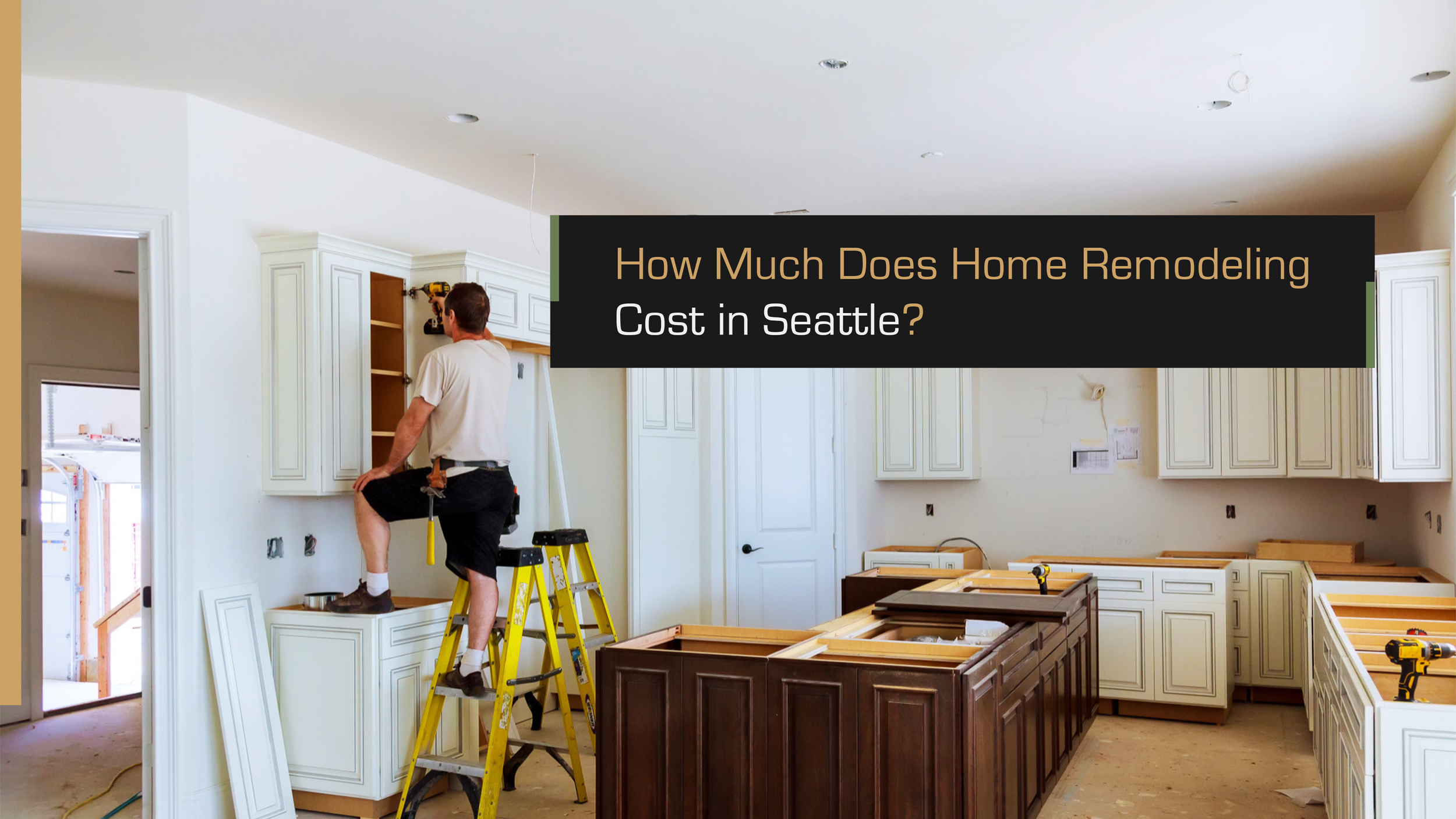
Home remodeling costs in Seattle tend to differ depending on a variety of factors, and a complete remodeling of a home requires proper planning and budgeting.
It is important to understand costs, hidden costs, and other relevant expenses—especially those associated with labor, permits, and project management—to avoid any surprises.
Home remodeling in Seattle has many benefits, including transforming your living space, maximizing functionality, and increasing property value. However, regardless of whether you want to remodel a single room or your entire home, every remodeling project has its own objectives and cost considerations.
Average Home Remodeling Costs in Seattle (2026)
Not all remodels are the same. Some homeowners choose to completely renovate their homes, while others prefer to upgrade specific areas over time.
However, one of the most important updates to understand is this:
Realistic Cost Range (Seattle Market)
For professionally managed remodeling projects in Seattle:
$400 to $700+ per square foot
$600 to $800+ per sq ft for smaller or more complex projects
This reflects real-world conditions, including:
Licensed contractors
Permits and inspections
Full project management
Current labor and material costs
Many online estimates are significantly lower, but they typically do not reflect the Seattle market.
Why Many Online Remodeling Estimates Are Misleading
You may come across numbers like:
Whole home remodel: $100,000 – $200,000
Kitchen remodel: $30,000
Bathroom remodel: under $10,000
While these may seem appealing, they are not realistic for full-scale, permitted renovations in Seattle.
These estimates often assume:
Minimal scope
Low-cost materials
No project management
Outdated pricing
For most homeowners, these numbers are not achievable in today’s market.
Whole Home Remodel Costs
When you decide to remodel your entire home, you are typically upgrading kitchens, bathrooms, living areas, flooring, and major systems like plumbing and electrical.
Updated Cost Breakdown
Light Remodel (cosmetic, same layout):
$400 – $500 per sq ftMid-Range Remodel:
$500 – $650 per sq ftHigh-End Remodel:
$650 – $800+ per sq ft
Example:
A 2,000 sq ft home can cost $1.0M to $1.5M+
These estimates reflect actual Seattle remodeling trends and provide a more accurate starting point for budgeting.
Partial Remodel Costs
Partial remodeling involves upgrading specific areas such as kitchens, bathrooms, or basements.
Updated Project Costs
Kitchen Remodel: $75,000 – $200,000+
Bathroom Remodel: $40,000 – $100,000+
Basement Remodel: $400 – $600+ per sq ft
Higher-end or complex projects can exceed these ranges depending on scope and materials.
Interior vs. Exterior Remodeling
Interior remodeling includes flooring, cabinetry, drywall, plumbing, and electrical work. These projects are often more labor-intensive and cost more per square foot.
Exterior remodeling includes roofing, siding, and outdoor structures.
However, unlike older estimates:
Costs vary widely based on scope
Exterior projects are no longer reliably “cheaper”
Additions and structural exterior work can exceed interior costs
High-End vs. Budget Renovations
High-end renovations include:
Custom cabinetry
Premium materials
Designer finishes
These can increase costs by 20% to 50%.
Budget-conscious renovations focus on:
Functional upgrades
Standard materials
Minimal structural changes
Cost to Remodel Entire Home in Seattle
On average, full home remodeling in Seattle typically falls within:
$400 to $700+ per square foot
Higher for complex or smaller projects
This range accounts for:
Design
Construction
Permits
Project management
Unlike basic estimates, this reflects total project cost—not just construction.
What Impacts Home Remodel Costs in Seattle?
Several key factors influence remodeling costs:
Project scope and complexity
Home size
Material quality
Design complexity
Labor availability
Contractor experience
Permits and regulations
Age of the home
Location within Seattle
Seasonality
Hidden Costs Most Homeowners Don’t Expect
Many “hidden costs” are actually standard components of a properly managed project:
Permits and inspections
Demolition and disposal
Site preparation
Electrical and plumbing upgrades
Structural engineering
Project management
Sales tax
These costs typically account for ~25% of the total project budget.
Total Project Cost Breakdown
A typical remodeling budget is structured as:
Construction (~75%)
Labor
Materials
Execution
Soft Costs (~25%)
Architecture and design (8%–12%)
Engineering (1%–3%)
Permits (1%–3%)
Taxes (6%–8%)
Additional services (1%–2%)
Example:
For a $1,000,000 remodel:
Construction: ~$750,000
Soft costs: ~$250,000
Cost Behavior Patterns
Smaller projects cost more per sq ft
Kitchens and bathrooms drive major costs
Moving plumbing/electrical increases expenses
Additions cost more than interior remodels
Clear planning leads to accurate estimates
Budget Multipliers
Expect cost increases from:
Structural changes: +10% to 30%
High-end finishes: +20% to 50%
Late decisions: +10% to 25%
Unknown conditions: +10% to 20%
Cost Comparison: Remodel vs New Construction
Deciding between remodeling and building new depends on:
Budget
Timeline
Property goals
In many Seattle cases, remodeling remains the preferred option due to land costs and location advantages.
Cost-Saving Tips Without Compromising Quality
Start planning early
Define scope clearly
Research real Seattle costs
Choose the right financing method
Set a contingency budget (10–20%)
Make decisions early
Work with experienced professionals
Conclusion
Home remodeling is a significant investment—especially in Seattle.
However, with proper planning, realistic budgeting, and the right team, it becomes an opportunity to enhance both your living experience and property value.
The key takeaway:
Don’t focus on the lowest estimate—focus on the most accurate one.
At Space|craft Homes, we help homeowners navigate this process with clarity, expertise, and precision.
FAQs
-
Most professionally managed remodels range from $400 to $700+ per square foot.
-
A full remodel for a 2,000 sq ft home typically ranges from $1M to $1.5M+.
-
Due to labor demand, permitting requirements, material costs, and project complexity.