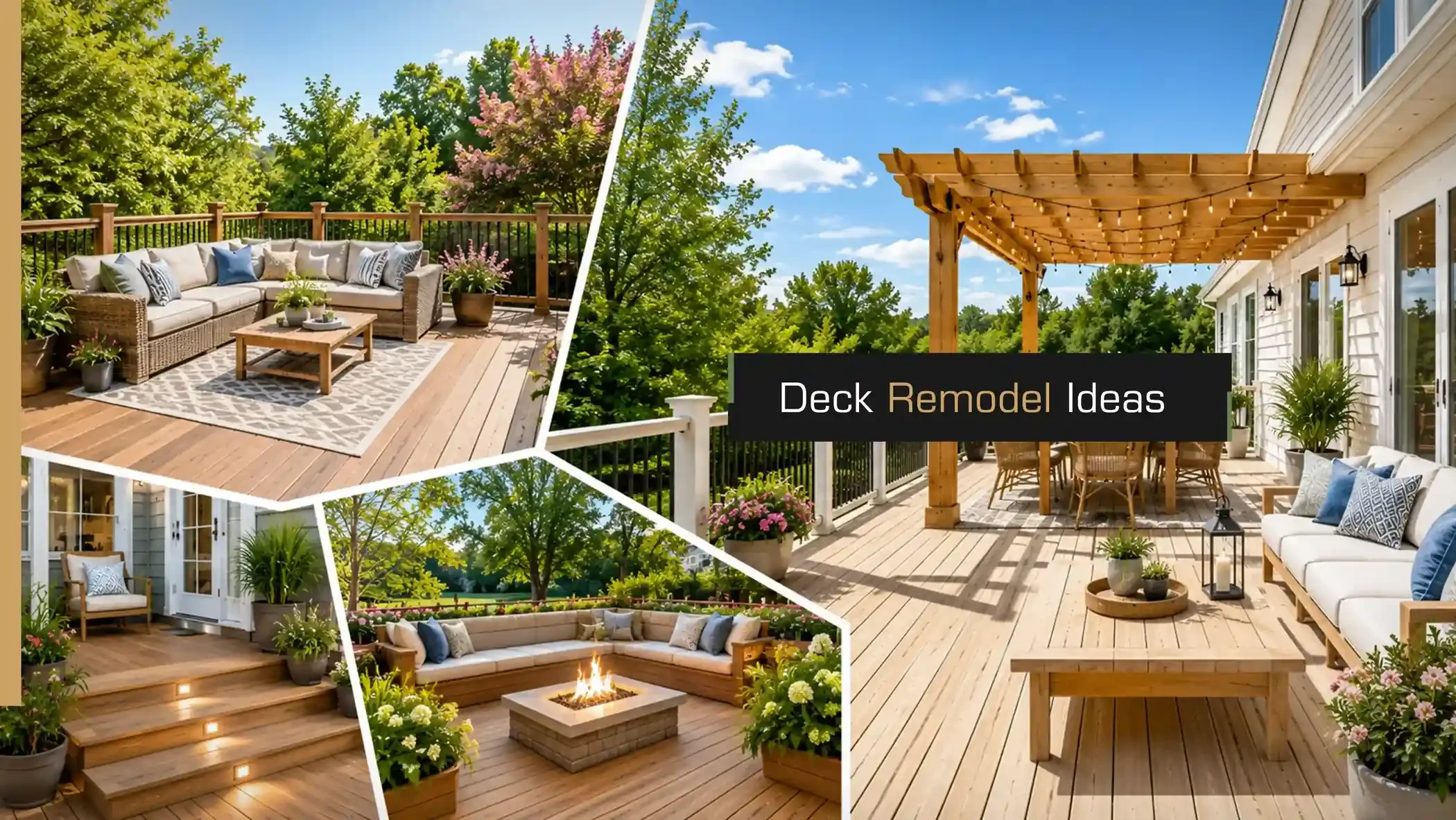
Slick, moss-covered boards and no shelter from the rain are why a lot of Seattle decks sit unused from fall through spring — constant moisture can leave even a structurally sound deck looking a decade older than it is.
But you don't have to replace every deck. Some updates — new stain, railings, or lighting — are enough, while other deck remodel ideas involve expanding the footprint or adding features for year-round use. This guide will help you decide whether yours needs a refresh or a full remodel.
Quick Answer: Refresh or Full Remodel?
It depends on your deck's condition, not its age. If the deck is structurally sound — solid framing and footings, no soft boards — a refresh such as new stain, railings, or lighting may be enough. If you're seeing rotting boards, weak footings, or failing railings, do a full remodel. For bigger projects, add a covered roof or pergola, or expand the deck's footprint.
Should You Refresh or Fully Replace Your Deck?
The choice comes down to the deck's condition and how you want to use the space. Refresh if all of these hold:
● The framing and footings are sound.
● The boards feel solid underfoot, with no soft spots.
● The railings are secure and meet current code.
● The current size and layout still work for you.
Before committing to a refresh, inspect the ledger board — where the deck attaches to the house — since it's the most common failure point. Check its flashing and fasteners for rot, rust, or moisture.
A full remodel is the safer choice if the deck is badly damaged. Remodel if you find rot at the joists or ledger, boards that flex or crack underfoot, shifted footings, or railings that fail a firm push test. It also makes sense if you want to add square footage, a cover, or an outdoor kitchen.
If you barely use your deck because it's wet and uncovered, adding a covered roof can make it comfortable throughout the year.
In Seattle, structural work or building a covered structure may require approval from the Seattle Department of Construction & Inspections (SDCI). It's a good idea to confirm current permit requirements with your contractor — or check the SDCI permit guidance directly — before planning begins.
Deck Refresh Ideas That Don't Require Rebuilding
If your deck is strong, you don't need a complete rebuild. These updates improve its appearance and make it safer and more convenient to use without changing the structure underneath.
Repaint or Restain the Deck Surface
Years of sun and rain leave a deck faded and more vulnerable to moisture; a fresh stain both improves how it looks and protects the boards. In Seattle, clean off moss and algae first, then wait for several consecutive dry days so the finish can bond — the reliable window runs roughly late June through early September. On horizontal boards, a penetrating stain generally outlasts film-forming paint, which traps moisture and peels in a wet climate. (Confirm product specifics with the manufacturer.
Upgrade the Deck Railings
Replacing railings is one of the fastest ways to make a deck look new again. Wooden railings give a classic look, while metal cable and aluminum railings read cleaner and more modern. If your railings are loose or no longer meet current building code requirements, replacing them makes the deck safer.
Add or Upgrade Deck Lighting
Lighting makes the deck safer after dark and extends how late you can use it. Recessed stair lights, post cap lights, and low-voltage pathway lighting all help — choose wet-rated fixtures with sealed connections, which matters in a damp climate. Energy-efficient LED fixtures also need very little maintenance.
Install Deck Skirting
The area under a raised deck usually sits empty. Deck skirting closes it in, hides the structure, and gives the deck a more finished look.
Deck Remodeling Ideas That Transform Your Outdoor Space
If you're planning a larger renovation, these deck remodeling ideas change how you use the space — turning the deck into a genuine extension of the house rather than just improving how it looks.
Add a Covered Roof or Pergola for Year-Round Use
A cover is what makes a deck usable through a Pacific Northwest winter, so here it's closer to essential than optional. Covered deck remodel ideas start with the type of cover: a solid roof gives the best rain protection, while a pergola provides partial shade and can be enhanced with retractable covers when you want flexibility. A permanent roof usually ties into the existing roofline and can change drainage and gutter loads, so it may trigger structural review. If you want lighting or a ceiling fan, plan the wiring during design — retrofitting it into a finished cover is far more expensive.
Extend or Expand the Deck Footprint
If your current deck feels too small, expanding it makes room for seating, dining, or a grill. Expanding usually means new footings — and in Seattle that brings in drainage, setbacks, and often a permit, depending on scope. A larger footprint also lets you create separate zones for dining and lounging while improving the connection between house and backyard.
Build an Outdoor Kitchen or Bar Area
An outdoor kitchen can be as simple as a built-in grill and counter, or as involved as a full setup with a sink, cabinets, and a small refrigerator — budget and space decide which. Choose materials rated for outdoor use, plan plumbing and electrical runs early, and give the cooking zone its own cover, since an outdoor kitchen you can't use in the rain won't get used in Seattle.
Pool Deck Remodel Ideas: Create a Pool or Hot Tub Zone
If you have a pool or a hot tub, the surrounding deck needs to be safe and comfortable. Well-planned pool decks use slip-resistant decking, wider walkways, built-in seating, and clear separation between wet and dry zones.
A filled hot tub with occupants is a heavy, concentrated load that can exceed a standard deck's capacity, so have the structure evaluated before installing one. From there, you can add privacy screens, lighting, and towel storage to make the surrounding area more usable.
Make Use of the Space Under Your Elevated Deck
The space under an elevated deck is usually wasted, but with a few changes it becomes a second outdoor room, or at least gets bikes, garden tools, cushions, and seasonal gear out of the garage.
An under-deck drainage system keeps it dry. Above-joist membranes sit on the framing and protect the structure itself, while below-joist panel systems create a finished ceiling for the room beneath — either way, the system needs a proper slope to a drain or to daylight. If your deck is high enough, you can finish the area as covered seating that stays usable even when it rains.
Choosing Materials That Hold Up to Seattle Weather
The material you choose drives how much maintenance the deck needs over its life, so weigh upfront cost against long-term upkeep:
● Composite or PVC decking: Highest upfront cost, lowest upkeep. Resists rot and moisture, though surface mold can still develop in damp conditions and needs occasional cleaning.
● Pressure-treated wood: Lowest upfront cost, but plan to clean and re-seal it regularly in Seattle's weather to keep it from degrading.
● Cedar: A PNW-native softwood with natural rot resistance and a warm look; needs regular sealing to hold its color in heavy rain rather than weathering to gray.
● Ipe: An extremely dense, durable tropical hardwood that's harder to work — it needs pre-drilling and hidden fasteners to install and periodic oiling to keep its color. Higher material and install cost than cedar.
Whichever you pick, make sure it's rated for wet outdoor conditions and meets your local building requirements. (Compare composite and wood options against a manufacturer or industry guide before deciding.)
Conclusion
The best deck remodel ideas match your deck's condition and how you want to use the space. Before deciding, check for soft boards, loose railings, and structural damage — especially at the ledger board — so you can choose the right approach with confidence.
Explore our deck remodeling services to learn more about your options.
Frequently Asked Questions
-
Yes. In Seattle's wet climate, decks face frequent rain and moisture year-round and need regular upkeep. If the frame and footings are still sound, remodeling can renew the deck without the cost of replacing the entire structure.
-
The best options are a permanent roof, an extension of the house roof over the deck, or a pergola with a cover you can open and close. Each keeps the deck drier so you can use it comfortably for most of the year.
-
It depends on the project. Small upgrades like staining, changing railings, or replacing boards generally don't need a permit. But structural work — new footings or a covered roof — may require SDCI approval, so it's best to check before you start.