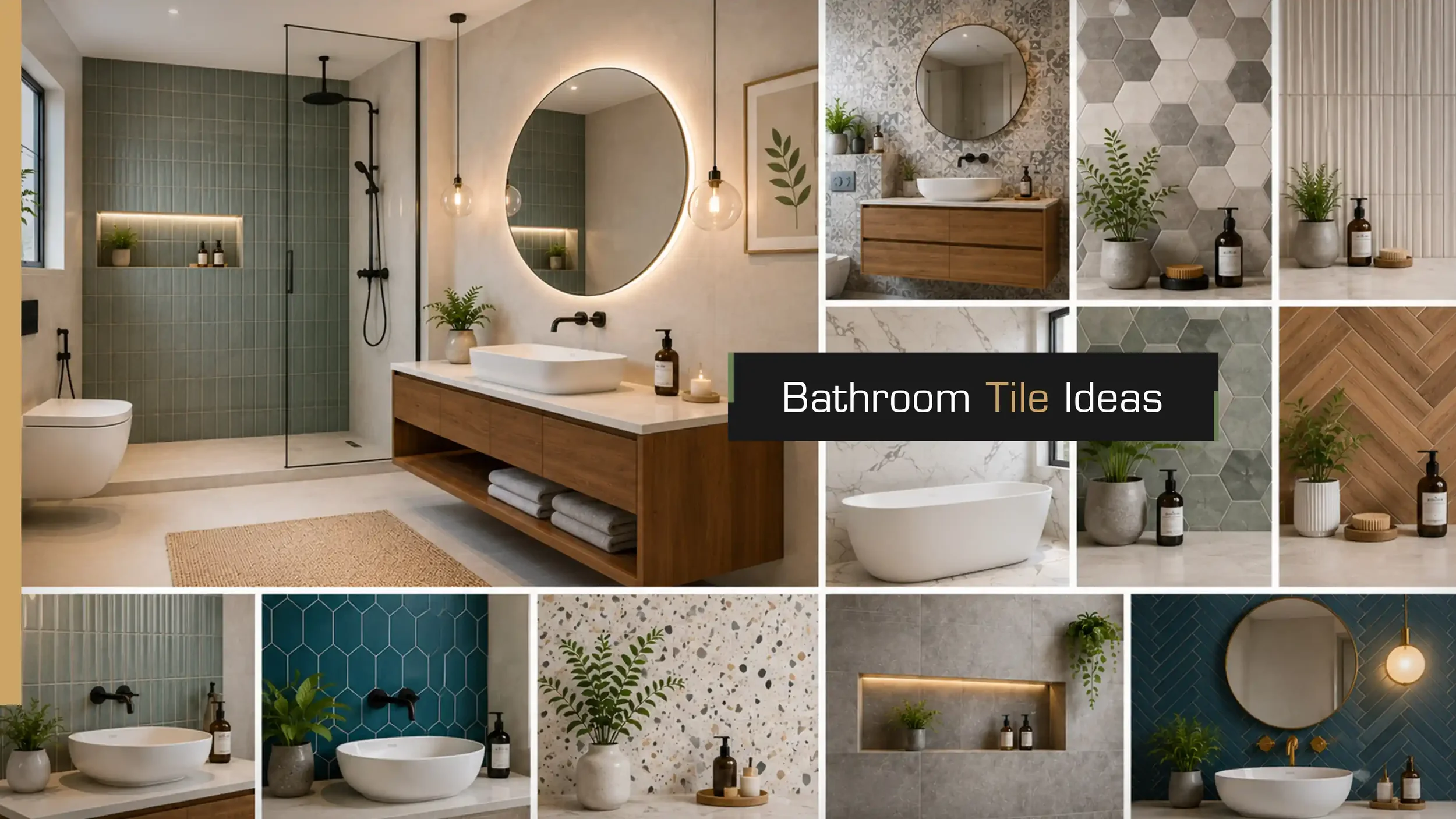
Tile is the biggest design decision you'll make in a bathroom remodel, and one of the hardest to undo once the grout sets. Good bathroom tile ideas start with knowing what holds up, not just what looks good in a photo. This guide covers materials, patterns, and the right tile for each zone, plus small-bathroom tricks and the 2026 trends worth knowing. At Spacecraft, we've spent over 20 years tiling Seattle bathrooms, so we know what survives our damp climate, sometimes because we've had to fix it after the fact.
Bathroom Tile Materials: What Each One Is Actually Like to Live With
Ceramic tile
Affordable, easy to cut, available in almost any color. Works well on walls and low-moisture zones, but it's softer than porcelain and chips more easily on floors, solid for budget remodels or accent walls.
Porcelain tile
Denser and less porous than ceramic, the workhorse of bathroom tile. It handles moisture and traffic better than ceramic or stone, but it's harder to cut, so labor runs higher, our first pick for shower floors, shower walls, and busy floors.
Natural stone (marble, slate, travertine)
A look no manufactured tile fully copies, and the highest-maintenance option, it needs sealing on a schedule your installer sets, often about once a year. In Seattle's humid climate, skipping a year shows fast in water spots and dulled patches.
Glass and mosaic tile
Reflects light beautifully; good for shower accents, niches, and backsplashes. Non-porous, so it resists staining and mold. It works better as an accent than a full surface not because of grout lines, but cost, cleaning time, and how busy that much pattern gets.
Cement / encaustic tile
Bold pattern and color porcelain printing can't match, beautiful, but highly porous, strictly a dry-zone material. We once got a call months after a remodel done by someone else, because the encaustic shower floor had already stained and pitted. In a wet zone, sealing isn't a one-time job.
Wood-look porcelain
The warmth of hardwood with water resistance real wood can't offer, strong for a spa-style floor in a damp climate. One caveat: long planks in a running bond are prone to lippage at the offset, so keep the stagger to about a third of the plank length, not half.
Seattle / PNW moisture note
Prioritize a matte or textured glazed finish over high-gloss, glaze alone doesn't determine slip resistance; finish and DCOF rating do. Look for a DCOF (dynamic coefficient of friction) of at least 0.42 wet on any floor, treating that as a floor, not a guarantee. PEI rating measures glaze abrasion, not slip resistance, PEI 3 suits a residential floor, PEI 1–2 a wall. The 0.42 threshold comes from ANSI A137.1, maintained by the Tile Council of North America.
| Material | Best Zone | Slip Resistance | Maintenance | Price Tier |
|---|---|---|---|---|
| Ceramic | Walls, low moisture areas | Fair (avoid wet floors) | Low | $ |
| Porcelain | Any wet zone | Good to excellent | Low | $$ |
| Natural Stone | Walls, dry floors | Fair, varies by finish | High (annual sealing) | $$$ |
| Glass / Mosaic | Shower accents, niches | Good (small format = more grip) | Medium | $$ |
| Cement / Encaustic | Dry floors, accent walls | Fair (needs sealing) | High | $$$ |
| Wood-look Porcelain | Bathroom floors | Good | Low | $$ |
Price tiers are relative to one another: $ = basic, $$ = mid-range, $$$ = premium.
Tile Patterns & Layouts: From Timeless to On-Trend
Subway tile
The most versatile pattern in bathroom design, how you lay it changes the whole feel. Running bond feels classic and forgives imperfect walls; stacked looks clean and modern; vertical draws the eye up, a good trick under a low ceiling.
Herringbone
Rectangular tiles set in a zigzag V, a simple shape with real visual movement. Beautiful as a feature wall or dry floor. Standard herringbone runs larger than a shower floor's 2x2-inch footing limit, so reserve it for walls or dry floors unless using a small-format mini-herringbone mosaic made for wet floors.
Hexagon tile
Ranges from tiny penny rounds to large-format hex. Penny rounds suit a shower floor: the small format flexes to follow the slope toward the drain without lippage, with extra grip from the grout lines as a bonus. Large-format hex gives a graphic look with fewer seams.
Basketweave
Pairs of rectangular tiles woven together, usually black and white, timeless rather than trendy, and busier than a straight lay.
Checkerboard
Black and white, or two soft neutrals, for graphic punch without a new shape. Works especially well on a small bathroom floor, where one bold pattern becomes the room's whole personality.
Large-format tile
Typically 12x24 inches or bigger, fewer grout lines, less cleaning, a calmer look. The trade-off: it needs a very flat, level surface or it shows lippage.
Zellige
Handmade Moroccan tile with irregular edges and a glossy, uneven glaze that catches light differently across every piece, texture machine-made tile can't fake, but pricier and needs a skilled installer.
Bathroom Floor Tile Ideas: Rules That Change Below Your Feet
Floor tile needs a different rulebook than wall tile, because a wet floorbehaves differently than a wet wall. Aim for a DCOF of at least 0.42 wet, a stain-resistant grout (epoxy or sealed cement-based, see the trade-off in Shower Tile Ideas below), and a tile size that suits the room.
For a shower floor, go small. Elsewhere, large-format tile is often better: fewer grout lines mean an easier floor to clean, though it demands a level subfloor. A patterned floor paired with plain walls becomes the room's focal point.
Grout color matters more than people think. Dark grout hides dirt well over time, suiting high-traffic zones. Light grout reads as one continuous surface but shows dirt faster and needs more cleaning, be honest about which one you'll actually maintain.
Avoid smooth, high-gloss glazed tile on any bathroom floor; that finish is exactly what turns slippery underfoot when wet.
For example, a 40-square-foot kitchen with quartz countertops at $50–$150 per square foot would typically cost about $2,000–$6,000 before additional fabrication features, edge profiles, and upgrades.
Bathroom Wall Tile Ideas: The Zone Outside the Shower
Vanity backsplashes, wainscoting, and half-walls sit outside the shower's wet-zone rules, opening up materials that don't belong on a floor. Ceramic is a strong, budget-friendly pick, since chip resistance matters less on a wall. Cement and encaustic tile, kept clear of any splash zone, can bring bold pattern porcelain printing that can't match, a powder room half-wall is the dry spot for it. Zellige reads beautifully here too, since it's about light and texture rather than slip resistance. Treat bathroom walls as the place to take the material risk you'd avoid on the floor.
Shower Tile Ideas: Different Zone, Different Rules
The shower sees constant wet and dry cycles and steam, which raises the risk of mold on the grout if you choose wrong. These bathroom shower tile ideas start from that constraint.On the shower floor, stick with a small tile, 2x2 inches or smaller, penny rounds or small hex. The small format flexes to follow the slope toward the drain without lippage, with extra traction from the grout lines. On shower walls, large-format porcelain or ceramic is smarter, since fewer grout lines mean less surface for mold.An accent niche in a contrasting tile gives the eye somewhere to land and makes the shampoo easier to find. A full tile surround makes the biggest statement but costs the most; a single feature wall behind the shower head gives similar impact for less.Building a steam shower? Stick to fully vitrified, glazed tile, porous stone or cement tile needs too much upkeep there. Tile is only part of it, though: you also need a proper vapor barrier behind the walls and a ceiling sloped enough to shed condensate. Skipping either is a bigger risk than the tile itself.Grout type matters as much as tile choice here. Epoxy grout resists mold far better than sanded, cement-based grout in a space that's damp almost constantly, though it's harder to work with, sets faster, and costs more, a trade-off worth it in a shower but less necessary on a dry wall.
Small Bathroom Tile Ideas: Techniques That Actually Work
Small bathroom tile ideas usually stop at "use light colors," but a good installer can do more.Carry the same tile from floor to wall in one continuous run, with no transition strip, and you remove the visual break that makes a small room feel chopped up. Large-format tile on a small floor sounds counter-intuitive, but fewer grout lines mean less visual noise, at the cost of needing a level subfloor.Glossy tile bounces light around a windowless bathroom, but save it for the walls, and keep the floor matte or textured, since a glossy floor works against the slip-resistance rules above. Vertical subway tile draws the eye upward, adding a sense of height even though the ceiling hasn't changed.For a very narrow bathroom, try laying square tile at a 45-degree angle, it reads as extra width, and the added cutting waste is usually worth it.Finally, limit the bold pattern to one surface, floor or a single wall, and keep everything else neutral. Two patterned surfaces compete and make a small space feel smaller, not bigger.
2026 Bathroom Tile Trends Worth Knowing
A few designs lead 2026's modern bathroom tile ideas:Zellige and handmade tile continue to lead, prized for the irregularity covered above, real staying power.Bold jewel tones, emerald, sapphire, deep burgundy striking on statement walls, but more of-the-moment than permanent.Terracotta and earth tones bring warmth back after years of cool grays a genuine shift, not a passing trend.Drenched, floor-to-ceiling tile in one material creates a cocoon-like spa feel, with staying power for a full remodel.Rounded, sculpted shapes are softening bathroom design's hard edges worth watching, still emerging.
How to Choose Bathroom Tile: Turning Ideas Into a Decision
Step 1: Define the zone first: Floor, shower floor, shower wall, or bathroom wall each have different rules, so lock the zone before falling for a tile.Step 2: Match material to the use case: Porcelain for any wet zone, natural stone if you'll commit to sealing on schedule, glass as an accent or on shower walls, cement tile for dry zones only.Step 3: Set a real budget: Material cost is only part of the story; patterned tile and natural stone both add labor cost, since they require more cuts and careful setting.Step 4: Order samples and get them wet: Viewing them under your bathroom's real lighting tile that looks perfect in a showroom often reads differently in a north-facing Seattle bathroom at 7am.Spacecraft tip: Get the DCOF rating and grout type from your installer in writing before work starts, a spec sheet holds up better than a verbal "non-slip" assurance if something goes wrong.
Conclusion
Get the zone and material right first, pattern and trend become the easy part once you know what holds up where water lives.Ready to turn these ideas into a real plan? Get in touch with Spacecraft for a bathroom remodel in Seattle. We handle everything from tile installation to a full shower remodel, browse our past project gallery for ideas.
Frequently Asked Questions
-
Porcelain, for most bathrooms, is dense, low-porosity, and better at handling moisture and daily traffic than ceramic or natural stone. Look for a DCOF of at least 0.42 wet, and expect a mid-range install cost, well below natural stone once labor is factored in.
-
Porcelain is denser and less porous, so it's usually the better pick for floors and shower zones. Ceramic is softer, easier to cut, and more budget-friendly, fine for walls or low-moisture areas.
-
Large-format tile, glossy wall finishes, and continuous floor-to-wall tile all help. Fewer grout lines reduce visual noise, glossy tile bounces light around a windowless room, and running the same tile floor to wall removes the break that makes a space feel chopped up.
-
Dark grout hides dirt better over time, suiting busy zones. Light grout reads as one seamless surface but shows dirt and staining faster and needs more frequent cleaning.
-
Large-format porcelain, with the fewest grout lines for dirt and mold to collect in. Epoxy grout beats sanded grout for upkeep, especially in a shower — and most bathrooms are back in use within a day or two of setting, so ask your installer about the timeline upfront.