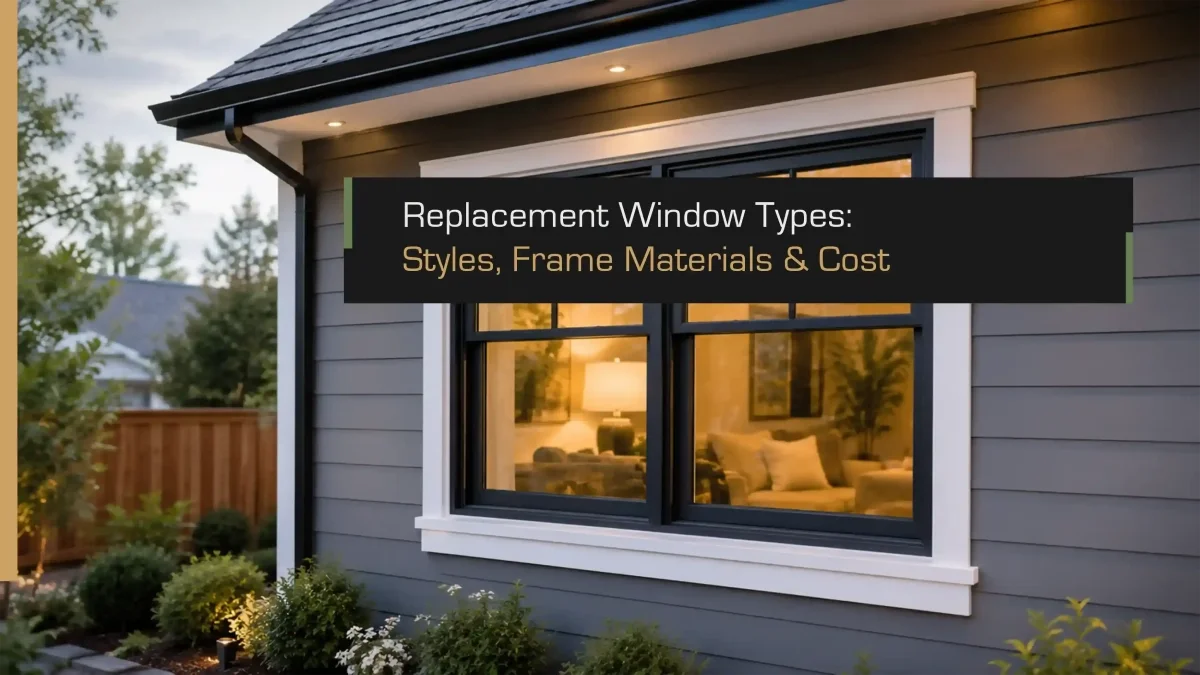
Starting a whole-home renovation and feeling overwhelmed by window choices? You’re not alone. Many homeowners in Seattle and the Puget Sound get stuck picking from dozens of replacement window types and materials, wondering which ones will actually hold up against cold, rainy winters. This guide covers all of it: the styles, the frame materials, real cost ranges, and which combinations make sense for a Pacific Northwest home, so you can walk into a quote conversation already knowing what to ask for.
Quick Answer: The Main Replacement Window Types
The main replacement window types are double-hung, single-hung, casement, awning, slider, bay, bow, and picture windows, grouped by how they open, the view and airflow they offer, and their price point. Frame material and climate performance matter just as much as style, especially in a wet climate like Seattle's.
Insert vs. Full-Frame Replacement
Before picking a style, decide which of the two types of window replacement your project needs. Insert (or pocket) replacement fits a new window into your existing frame, leaving exterior trim and siding untouched. It's faster, cheaper, and the default for most one-off swaps. Full-frame replacement removes the old frame down to the studs. It costs more and takes longer, but it's the right call when a frame has rot or water damage, or when you're already re-siding as part of a larger renovation. That choice affects labor time, a big piece of the cost figures below. See our window installation process page for more detail.
Replacement Window Types Compared by Style
Style determines how a window opens, how much air and light it lets in, and how it reads on your home's exterior. The eight styles below cover nearly every replacement project. For Seattle homes specifically, casement and awning windows tend to earn their keep in bathrooms and kitchens, since their crank mechanism compresses the sash tightly against the frame, giving a better seal against wind-driven rain than a slider or hung window typically achieves.
| Style | How it Opens | Best for | Watch out |
|---|---|---|---|
| Double-hung | Both sashes slide vertically | Traditional homes, easy cleaning | Can leak more air than casement over time |
| Single-hung | Bottom sash slides, top is fixed | Budget-friendly upgrades | Less ventilation flexibility |
| Casement | Cranks outward on a side hinge | Hard-to-reach spots, tight seals | Needs clearance to swing open |
| Awning | Cranks outward, hinge at the top | Ventilation during light rain | Limited size options |
| Slider | Glides horizontally | Wide openings, modern look | Track can collect grit and moisture |
| Bay | Angled 3-window projection | Adding light and floor space | Higher cost, needs structural support |
| Bow | Curved 4-to-6 window projection | Panoramic views, statement rooms | Priciest options, longer install |
| Picture | Fixed, doesn’t open | Views, natural light, energy efficiency | No ventilation on its own |
Beyond these eight, a few specialty types round out most projects: arch or round-top windows add architectural interest above a main window, garden windows create a small shelf for plants, hopper windows hinge from the bottom for basements, and egress windows are required in every sleeping room under Washington's residential code, sized to meet a minimum opening for emergency escape.
Replacement Window Frame Types for a Wet Climate
Frame material affects how a window handles Seattle's persistent damp, condensation-prone winters, and long stretches of grey light more than almost any other choice you'll make.
| Material | Pros/Con | PNW Fit |
|---|---|---|
| Vinyl | Affordable, low maintenance, won’t rot; fewer color options | Resists moisture and swelling, a solid default choice |
| Fiberglass | Strong, stable through temperature swings, holds paint well; higher upfront cost | Handles repeated wet-dry cycles with minimal warping |
| Wood | Classic look, good natural insulator; needs regular painting or sealing | Vulnerable to rot without diligent upkeep in our climate |
| Aluminum | Slim sightlines, durable; conducts cold easily | Prone to interior condensation in cooler, damp winters |
Vinyl and fiberglass resist moisture and warping in ways wood can't without regular upkeep, which matters when a house sees rain most months of the year. Whatever material you choose, pair it with Low-E glass and warm-edge spacers. According to ENERGY STAR guidance, these features help keep the interior glass surface warmer, which cuts down on the condensation that fogs windows on cold, grey mornings and helps rooms feel more comfortable through Seattle's long overcast stretches.
What Replacement Windows Cost
| Window Style | Typical Installed Cost (Per Window) |
|---|---|
| Single/Double-hung | $450–$800 |
| Slider | $450–$850 |
| Casement/Awning | $500–$900 |
| Picture | $500–$1,100 |
| Bay | $1,500–$3,500 |
| Bow | $2,000–$4,500 |
Prices climb with complexity. Hung and slider windows are cheapest to install, casement and awning cost a bit more for their hardware, and bay or bow windows run highest since they involve structural framing. Material shifts these ranges too: vinyl sits at the low end, while fiberglass and wood push costs up 15 to 30 percent. Full-frame replacement adds several hundred dollars per window over an insert job for the extra labor. These are ballpark ranges; actual pricing depends on window size, glass package, and your home's installation challenges. For a firm number, start with a free quote, or see our full guide to the cost of window replacement.
Choosing the Best Replacement Window Types for a Seattle Home
For Seattle climate, work through the decision in this order:
Start with material: a moisture-resistant frame paired with efficient, energy-efficient glazing is close to non-negotiable in a place that sees rain most of the year. That's what separates the best replacement window types for cold, wet climates from options that look great in a showroom but fog up or warp within a few winters. Next, match style to room: casement and awning for humid spaces like bathrooms and kitchens, larger picture or bay windows where you want more light on grey days. The budget comes last, once material and function are settled. Washington's energy code sets minimum efficiency requirements for replacement windows, and some utilities offer rebates for higher-performing units, so it's worth asking your Seattle-area installer what you qualify for before finalizing a quote.
Frequently Asked Questions
-
Double-hung and single-hung windows remain the most common choice for Seattle homes, since they fit traditional architecture and cost less to install. Casement and slider windows follow closely, popular for kitchens and living areas where easy operation and clear views matter. Bay and bow windows are chosen less often, typically for a main living space that needs extra light.
-
Vinyl and fiberglass are generally the strongest picks for Seattle's damp climate, since neither rots, swells, nor needs repainting like wood. Fiberglass costs more but holds up especially well through repeated wet-dry cycles. Wood can still work with diligent maintenance, while aluminum tends to struggle with condensation in our cooler, moisture-heavy winters.
-
Insert replacement fits a new window into your existing frame and trim, making it faster and less expensive. Full-frame replacement removes everything down to the studs, costing more but becoming necessary when a frame has water damage or rot, or when a renovation already involves re-siding the exterior.
-
Install costs generally range from around $450 for a basic hung or slider window up to $4,500 for a bay or bow window, depending on size and glass package. Material choice and insert vs. full-frame replacement both shift these numbers, so a personalized quote is the most accurate way to budget.