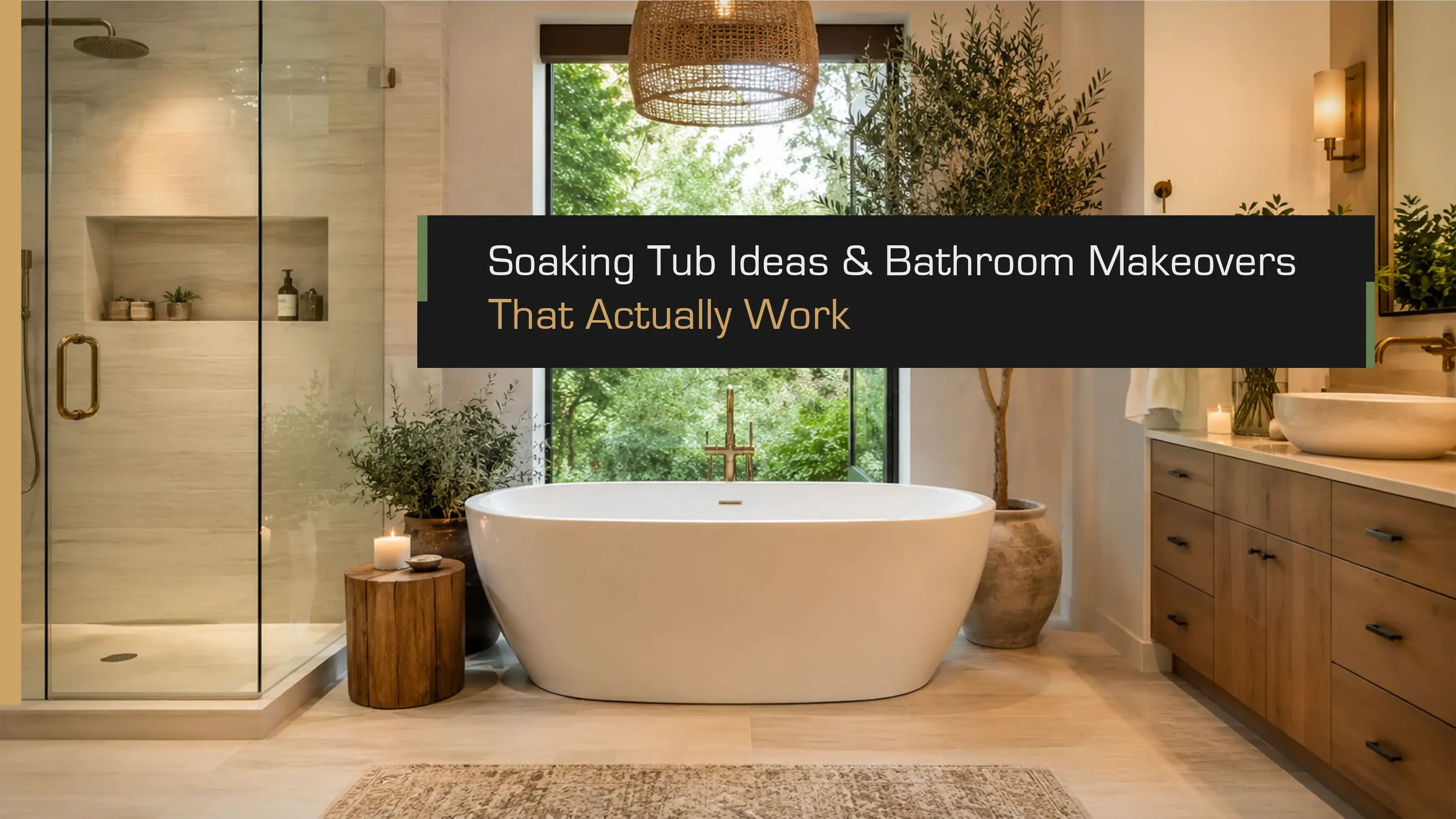
Few upgrades turn an ordinary bathroom into a retreat you actually look forward to at the end of the day; a soaking tub is one of the rare ones that does. If you love baths, you're in the right place; these soaking tub ideas are pulled from real homes, not just glossy showrooms, so you can actually picture them working in yours. Think of the guest bath where swapping in a deeper tub needed nothing more than the existing drain, no wall moved, no layout rebuilt. Whether you've got a sprawling master bath or a tight footprint that feels too small for a tub, there's a style to fit. Ahead: 10 ideas, small-space solutions that actually work, and honest guidance on cost and fit before you commit.
What Is a Soaking Tub?
The best soaking tub ideas start with the tub itself: a soaking tub is a bathtub built deeper than standard, designed for full-body immersion rather than just sitting with your legs stretched out. It typically holds more water than a conventional tub and is often freestanding, though built-in versions exist too. The extra depth is the whole point — that's what makes it feel like a soak, not just a bath.
What Makes a Soaking Tub Different (and How to Design Around It)
Good soaking tub bathroom design starts with knowing your options. At a glance, the main types are freestanding, clawfoot, Japanese-style (ofuro) deep soakers, drop-in or undermount, and combo tubs that pair with a shower. Once you've picked a style, two decisions shape everything else: where the tub sits (under a window, as a corner focal point, centered in the room) and whether it's freestanding or built into a deck. Get those two right and the rest gets much easier.
10 Soaking Tub Ideas & Makeovers
1. Freestanding Tub as the Room's Centerpiece
Freestanding soaking tub ideas almost always start here: place the tub away from the wall so it reads as sculpture, not fixture. It works because the room gets a clear focal point the moment you walk in. Tip: leave at least a few feet of clearance on all sides so it doesn't feel cramped.
2. Clawfoot Tub for Timeless Character
A clawfoot brings old-world charm without feeling dated, especially in a period home. The raised feet and rolled rim add visual weight without bulk, so it reads as furniture more than plumbing. Pair it with a matte black or brass floor-mount faucet to keep it from feeling too vintage.
3. Japanese Soaking Tub (Ofuro) for Deep Immersion
Compact but deep, an ofuro-style tub is built for sitting upright with water up to your chest. It works because it delivers true immersion in a smaller footprint than a standard soaker. Tip: pair with a separate rinse-off shower, as is traditional, rather than bathing in the tub itself.
4. Modern Sculptural or Oval Freestanding Tub
Another strong freestanding soaking tub idea: a smooth, oval, resin or stone-composite tub with no visible seams. The minimal silhouette suits contemporary bathrooms because it doesn't compete for attention. Keep the surrounding palette neutral and let the tub's shape do the talking.
5. Tub Under a Window with a View
Positioning the tub beneath a window turns bath time into a small daily ritual. It works because natural light and a view do most of the design work for you. Tip: use frosted glass or a high sill for privacy without sacrificing light.
6. Matte Black or Bold-Color Tub for Contrast
A black, forest-green, or terracotta tub against white wallsmakes an instant statement. It works because contrast turns the tub into art rather than just plumbing. Tip: repeat the accent color once elsewhere (towels, a stool) so it feels intentional, not accidental.
7. Undermount Soaking Tub with a Stone or Quartz Deck
A built-in tub set into a stone deck feels more custom and permanent than freestanding, and the deck doubles as shelf space for candles or a book. If you can, extend the same stone up one wall so the whole surround reads as one continuous material.
8. Wet Room with a Soaking Tub
A wet room with soaking tub design removes the shower enclosure entirely, so the tub sits in one continuous waterproofed space with the shower. It works because it feels open and hotel-like while making cleanup simpler. Tip: slope the floor to a central drain and use slip-resistant tile throughout.
9. Soaking Tub + Shower Combo (Keep Both)
For soaking tub shower combo ideas that keep both fixtures, set an undermount tub beside a separate glass-enclosed shower rather than replacing one with the other. Tip: a half-wall or glass divider keeps the tub feeling separate and calm.
10. Tub-and-Shower Side by Side for Spa Symmetry
Mirror the layout: shower on one side, tub on the other, matching tile and fixtures throughout. The symmetry reads as intentional, spa-grade design rather than a compromise. Keep both in the same finish family so the room doesn't feel split in two.
Small Bathroom Soaking Tub Ideas
A small footprint doesn't rule out a soak. Small bathroom soaking tub ideas just lean on different tub types and smarter placement:
Japanese/ofuro deep soakers: built for sitting upright, so you get full submersion in a fraction of the floor space a standard tub needs.
Corner and short (54") tubs, or slipper tubs: tuck into a corner or against one wall instead of demanding open floor space on all sides.
Undermount tubs under a windowsill or in an alcove: recessed placement borrows space that would otherwise sit empty.
A combo tub-shower: gives you both fixtures without the footprint of two separate ones.
The common thread: pick a tub built for depth over width, and let the room's existing dead space (a windowsill, an alcove, a corner) do the work.
What a Soaking Tub Costs & What to Check First
Costs vary widely by type, material, and region, but it helps to have a ballpark. According to Angi's 2026 data, deep-basined soaking tubs range on average from $600 to $13,000 for the tub itself, with price mainly driven by material and size, and a full bathtub replacement, including removal and installation, averages around $5,906. Treat these as planning ranges, not quotes; get an itemized estimate for your specific space.
Before you commit, check three things people often forget: floor load (cast iron and stone tubs are heavy, and older floors may need reinforcement),plumbing and drain location (moving either adds cost fast), and doorway and clearance for delivery, since a large freestanding tub has to physically get into the room.
One material trade-off worth knowing: acrylic is lighter, warmer to the touch, and more affordable; cast iron or stone holds heat longer and looks more substantial, but costs more and weighs considerably more.
Bringing Your Soaking Tub Makeover Together
The best soaking tub ideas come down to three decisions: the type that fits how you actually bathe, a placement that makes it the room's focal point, and an honest check on fit and cost before you fall for a tub that won't work in your space. Once those line up, the rest (tile, fixtures, color) is just styling. Picture it in your own bathroom, not a showroom, and you'll know pretty quickly which idea is yours.
Ready to see it come together in your space? Book a consult to get started.
Frequently Asked Questions
-
A soaking tub is built deeper for full-body immersion, usually holding more water than a standard tub. Regular tubs are shallower and designed more for sitting with legs extended than shoulders submerged.
-
Yes. Japanese-style ofuro tubs, corner or short (54") tubs, and undermount designs tucked under a windowsill all deliver a real soak without needing a large footprint.
-
Acrylic is lighter, warmer to the touch, and more budget-friendly. Cast iron and stone hold heat longer and feel more substantial, but cost more and require sturdier floor support.
-
It varies widely by size, material, and scope, but soaking tubs typically range from roughly $600 to $13,000 for the tub alone, with a full bathtub replacement, including removal and installation, averaging around $5,906.
-
Yes, either as an undermount combo tub with an attached shower, or as two separate fixtures side by side, such as in a wet room layout.
-
Materials like cast iron and stone retain heat longer than acrylic. Jets are available on some soaking tubs, though many people choose a plain soaker specifically for quiet, still immersion.
-
It depends on your bathroom's footprint and how you'll use it. A 54" corner or ofuro-style tub fits small spaces, while freestanding tubs typically need several feet of clearance on all sides.