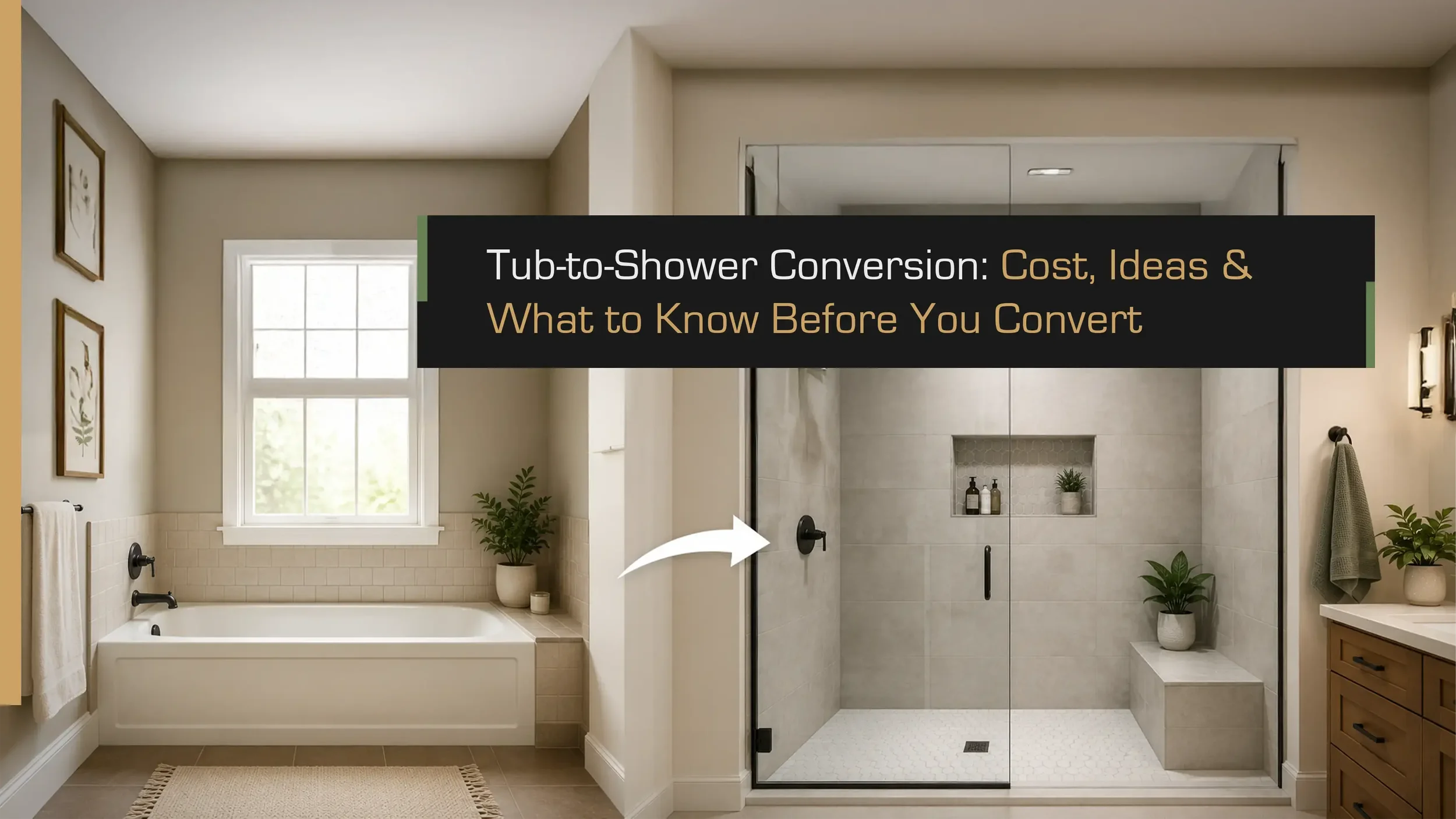
If you take a shower every day but you hardly ever take a bath, that big tub can occupy too much space, especially in a small bathroom, where it is important to be able to move around easily and have things work well.
A tub-to-shower conversion is one of the most popular bathroom upgrades when they remodel their bathrooms. If you replace your bathtub with a shower, it can make the room feel bigger and safer. Most tub-to-shower conversions start at around $1,200 and average about $3,000. This cost depends on the materials and labor used for the conversion.
Is getting rid of your bathtub and putting in a shower the right thing to do for your house?
We will tell you everything you need to know about tub-to-shower conversions, including how much they cost, what design options you have, and what the process is like.
What Is a Tub-to-Shower Conversion?
A tub-to-shower conversion is when you remove the bathtub and replace it with a shower within the same space. The goal is to make use of existing space and make the bathroom more open, spacious, and functional.
There are two ways to do it:
Prefabricated Shower Systems
These showers use acrylic or fiberglass bases and wall panels that are made to fit the size of a tub. They are faster to install with very little maintenance.
Custom Tile Showers
A custom shower is built with tiles in the place of a bathtub. You can also add some storage spaces, a seat, and nice fixtures. This way you can make it look how you want, but it will cost more money and take longer to finish.
Tub-to-shower conversions are really popular now. Most people now prefer showers to baths, and a low-step shower is easier to use as you get older. It also makes the bathroom feel bigger and easier to move around in. This kind of conversion makes the bathroom feel bigger. It is easier to get around.
How Much Does a Tub-to-Shower Conversion Cost?
The average cost to convert a tub to a shower is around $3,000 to $8,000. However, the actual cost of the project can vary a lot. It depends on the materials you choose, the labor costs, the plumbing work needed, and how customized you want the shower to be.
| Shower Type | Typical Installed Cost |
|---|---|
| Prefab Shower Kit | $1,200 to $2,999 |
| Mid-Range Shower Conversion | $3,000 to $6,999 |
| Custom Tiled Shower | $7,000 to $15,000 or more |
What Drives the Cost?
Here are some of the things that affect the cost:
Plumbing modifications: Just moving the drain can add around $900 to $1,100 to the project.
Shower valve upgrades: If you need to replace or move the shower valve, this can add another $700 to $1,200.
Glass enclosures: If you want a shower with frameless glass, it is going to cost a lot more than a shower with a frame or a semi-frameless enclosure.
Material selection: If you choose acrylic surrounds, they are usually cheaper than tile, but natural stone or custom tile work is the most expensive option.
Repairs: After removing the tub, you find problems like water damage or floor damage.
Permits: You need to get permits; they can cost from around $200 to $2,000 depending on where you live.
The single best way to control the cost of the shower is to keep the new shower in the bathtub's original location because avoiding plumbing relocation can save the homeowners thousands of dollars. Homeowners who are planning a renovation: Get your bathroom checked by a professional before starting.
Tub-to-Shower Conversion Ideas & Design Options
The best tub-to-shower conversion ideas are the ones that have both style and functionality.
Walk-In & Curbless Designs
Walk-in showers make the bathroom look bigger and more open, which is really helpful in a small bathroom. This makes the bathroom a safer place for people of all ages to use.
Glass, Niches & Seating
Frameless glass enclosures are really popular because they let lots of light into the room. Built-in storage niches get rid of the need for those big shower caddies that take up so much space. Adding a bench or a fold-down seat to your frameless glass enclosure is also a great option.
Tile & Material Choices
Porcelain tile is a choice because it looks really clean and modern with low maintenance. Natural stone is really fancy. It needs a lot more effort to keep it looking good. Acrylic wall panels are something that will last a long time and do not cost too much money. They are also easy to clean.
Feature Upgrades Worth Considering
Some popular things people like to add to their showers include:
• Linear drains
• Rainfall showerheads
• Handheld shower combinations
• Slip-resistant flooring
• Digital shower controls
• Integrated lighting
Before-and-After Transformation
Most homeowners love how the finished shower looks. Looking at pictures of a tub to shower conversion before and after can really help people who own homes see how much of a difference it can make. When you take out a tub, it makes the bathroom look nicer, and it feels bigger and more modern.
Pros and Cons of Converting a Tub to a Shower
You should weigh the advantages and disadvantages before making a tub-to-shower conversion
Pros
They are safer and easier to use
You do not have to step over a tub wall to get in and out
They make better use of bathroom space.
They are easy to clean and take care of
You might even save some water
They look modern and up-to-date.
Many people who want to buy a house like walk-in showers in the right market
The Centers for Disease Control says that bathroom injuries happen to hundreds of thousands of people every year. Safety in the bathroom is crucial; that is why slip-resistant surfaces and easier-access showers are good upgrades to make.
Cons
If you do not have a soaking bathtub, it is a loss.
This might affect the price of the home when you try to sell it.
When you do a custom project, it can cost a lot of money.
If you decide to do construction, it will be very disruptive.
When you start to demolish something, you might find things that need to be repaired.
A walk-in shower may not be as relaxing as a bathtub.
The Biggest Drawback: Losing the Only Tub
Families with kids and some people who might buy the house in the future may see not having a bathtub as a drawback, but you want a bathroom that's safer and easier to use. A tub-to-shower conversion can really help with this. You can have a bathroom that's more accessible and functional.
The Conversion Process: What to Expect
Knowing these steps helps homeowners understand what to expect.
1. We start with planning and taking measurements.
2. Next we remove the tub and do demolition work.
3. Then we inspect the subfloor and framing.
4. After that, we make any plumbing changes.
5. We install waterproofing to prevent leaks.
6. Following that, we put in the shower base and walls.
7. Next, we install fixtures such as faucets, handles, and other finishing touches.
8. Then we add the glass enclosure around the shower.
9. Finally, we do an inspection and clean up.
Standard conversions usually take around one to two weeks to finish. If you want custom tile work, it will probably take a bit longer because the tiles need time to be put in place and to set properly.
Two elements should never be skipped:
Waterproofing: Proper waterproofing keeps walls, framing, and subfloors safe from moisture damage
Permits and Code Compliance: When you do plumbing work, you might need permits and inspections. This is because following the rules in your area helps keep you safe and protects the value of your house.
Before You Convert: Resale, Accessibility & Layout
Before you decide, think about how the conversion will affect your home over the years you will live in it.
Resale Value
Most home buyers still want a bathtub. An NAHB survey found that 72% of buyers consider both a shower stall and a tub essential or desirable. If you can, keep at least one bathtub elsewhere in the house.
Accessibility and Aging-in-Place
If you plan to stay in your home for a time, think about your future mobility needs.
Things to consider adding to your home are:
• A curbless entry
• Grab bars in the bathroom
• A built-in bench
• Flooring that is slip-resistant
• A handheld showerhead
Layout Considerations
The biggest decision you have to make when it comes to budget is usually where to put the plumbing. If you keep the shower drain and the water supply lines where they are now, that will save you money on labor.
DIY Kit vs. Hiring a Pro
When people are looking for a tub-to-shower conversion kit, they are also thinking about doing a DIY tub-to-shower conversion. A tub to shower conversion kit usually has a shower base that is already made and wall panels that match.
DIY Advantages
• DIY usually costs less because you don't pay for labor.
• You get to be more involved in the project personally
• You can save money on labor because you are doing the work
• Many people enjoy completing the project themselves
DIY Risks
People often make mistakes with waterproofing
Plumbing errors are pretty common too
There are also issues, with getting the right permits and following building codes
This can make the whole project take longer than expected
If the installation isn't done right, you might end up with hidden water damage
When Hiring a Pro Makes Sense
Professional installation is usually an option in these cases:
• The plumbing needs to be moved
• You are using custom tiles
• You need permits
• You want a guarantee for the work
• You want the shower to last a long time
Conclusion
A tub-to-shower conversion can make your bathroom more accessible, modernize the space, and make it fit your lifestyle better. For many homeowners, it is a practical investment that delivers convenience and looks great too. The right choice depends on your budget, bathroom layout, long-term plans, and whether you are comfortable giving up a bathtub. Understanding the costs, design options, and trade-offs before starting will help you make the best decision for your home. If you are thinking about a conversion, book a consultation to assess your space, discuss design options, and get a project estimate.
Frequently Asked Questions
-
Most tub-to-shower conversions cost between $3,000 and $7,000. A basic prefab shower kit can cost as little as $1,200 to $2,999, while a custom tiled walk-in shower can cost $7,000 to $15,000 or more.
-
Most bathroom conversions take around one to two weeks to complete. Basic prefab systems can be finished faster. On the other hand, custom tile showers take longer.
-
It does not always hurt. Taking out the only bathtub in a home can make some buyers less interested. This is especially true for families with kids.
-
Yes, lots of people use DIY kits to do it themselves. If you make mistakes with waterproofing or plumbing, it can cost a lot to fix later.